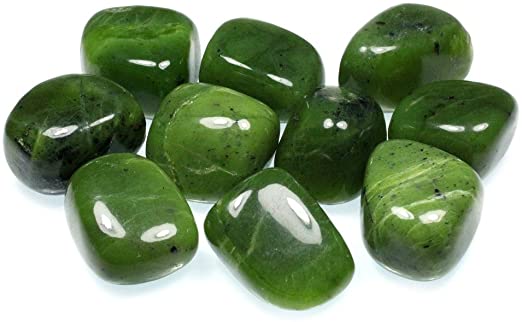
White aluminum oxide 2000mesh as a polishing agent for jade
The polishing process for agate and jade is as follows: 320-grit black silicon carbide (coarse grinding) → 600-grit black silicon carbide (medium grinding) → subsequent fine polishing → white aluminum oxide 2000mesh for polishing. For rough and medium grinding of jade and agate, 320# and 600# black silicon carbide (Mohs hardness 9.2) are typically used. Its sharp edges and strong cutting force result in high grinding efficiency. Fine polishing uses fine-grained alumina polishing powder as a polishing agent.
After the workpiece has undergone shaping and leveling with 320-600-grit black silicon carbide, there are no large pits. Only microscopic scratches need to be removed and a mirror finish achieved. At this point, the performance requirements change; the focus shifts from strong cutting power to: no staining, no dirt embedding, fine grains, and a warm, lustrous finish.
1. High Purity, No Dark-Colored Contamination
White fused alumina contains ≥99.5% Al₂O₃, virtually free of carbon and iron impurities. Jade and agate have minute capillary cracks, so polishing will not leave black debris. That process prevents the jade surface from turning gray or black, preserves the original color of the jade. The black residue from fine silicon carbide powder is precisely what is detrimental to fine polishing.
2. Suitable Hardness, Gentle Micro-Cutting, No New Scratches
White aluminum oxide powder has a Mohs hardness of 9, higher than jade (Hetian jade, jadeite, agate 6-7 Mohs). The grain edges are slightly blunter than silicon carbide. The 2000-mesh particle size is fine, removing only the microscopic scratches left by 600-mesh particles without removing a large amount of material. Moreover, the particles will slightly break and sharpen themselves, providing continuous and even polishing without damaging the jade.
3. Strict Particle Size Grading, No Large Particles, Achieving a Continuous Reflective Surface
The white aluminum oxide 2000mesh powder undergoes meticulous grading, resulting in virtually no excessive coarse particles and eliminating accidental scratches. This process smooths the microscopic unevenness of the jade surface. It can create a continuous reflective curved surface that achieves the unique warm, oily luster of jade, not a false, artificial shine.
For jade and agate, 320-mesh and 600-mesh black silicon carbide are used for coarse and medium grinding. Their sharp cutting ability quickly removes pits and deep scratches from the rough material, completing the workpiece shaping and leveling. However, black silicon carbide contains carbonaceous impurities. It can easily embed into jade cracks during fine polishing. That always cause the surface to appear grayish-black and failing to achieve a high-gloss effect. After medium grinding,white corundum 2000mesh is switched as a brightening agent. This micro-powdered alumina has high purity and very few colored impurities, preventing contamination of the jade’s natural color. Its concentrated particle size distribution, relying on gentle micro-cutting, eliminates minor scratches remaining from previous processes. As a result, it can create a uniform and continuous reflective surface that presents the warm, translucent, oily luster of jade. In the meantime, compared to expensive diamond micron powder, WFA 2000mesh balances polishing effect and production cost, making it suitable for mass processing of jade.