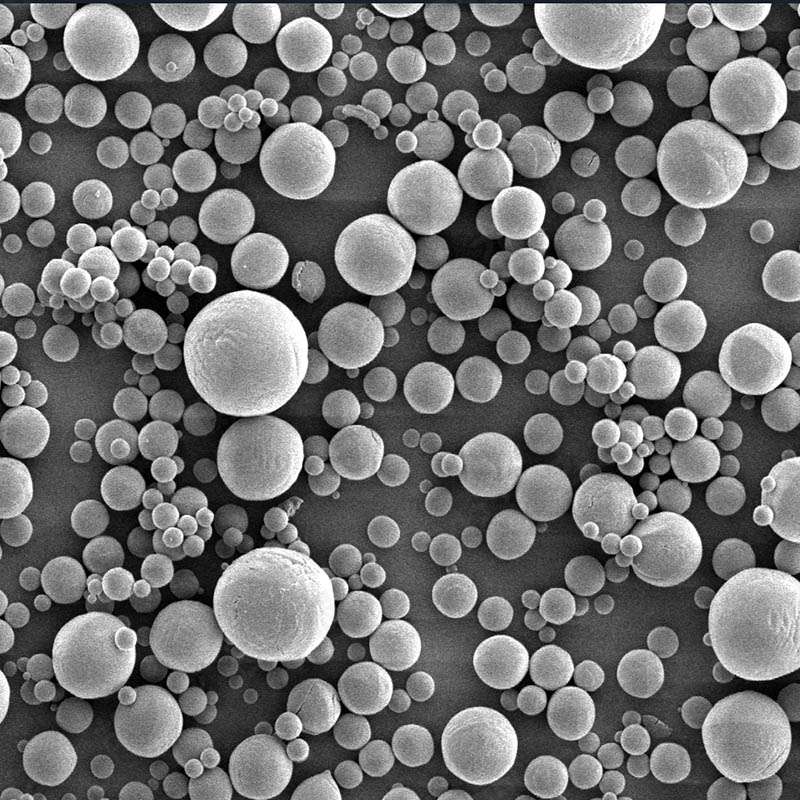


Spherical Alumina Powder Applications in thermal conductive field
Spherical alumina powder (thermally conductive alumina microsphere) has become a key functional material in electronics, new energy, advanced ceramics, catalysis, and precision machining due to its core advantages such as high thermal conductivity, high insulation, high sphericity, high filling capacity, low viscosity, and chemical stability. Based on authoritative scientific research and industry standard literature, the following summarizes its main applications.
I. Electronic Packaging and Thermal Management
1. Epoxy Molding Compound (EMC)/Encapsulating Material
– As a core thermally conductive and insulating filler, it is used in the packaging of ICs, power devices, LEDs, and sensors to improve the thermal conductivity of the package, reduce thermal resistance, and reduce warpage.
– The spherical structure achieves a high filling rate (up to 70–85 wt%), reduces resin viscosity, improves flowability and moldability, and is suitable for advanced packaging (Fan-out, 2.5D/3D, SiP). Spherical Alumina: Spherical alumina can improve EMC thermal conductivity from 0.8–1.2 W/(m·K) with ordinary fillers to 2.0–3.5 W/(m·K) and significantly reduce the coefficient of thermal expansion.
2. Underfill/Encapsulating Adhesive:
– Used in advanced packaging such as BGA, CSP, and Flip-Chip, it fills the gap between the chip and the substrate, enhancing heat dissipation, buffering thermal stress, and improving reliability.
– Spherical particles result in low viscosity, good filling properties, and no air bubbles in the adhesive. After curing, the thermal conductivity can reach 1.5–2.5 W/(m·K).
3. TIM (Thermal Interface Material):
– The mainstream filler in thermal grease, thermal gel, thermal pads, and thermal adhesives, used for thermal interface heat dissipation in CPUs/GPUs, power modules, IGBTs, and optical modules. – Advantages: High filler content, low viscosity, high thermal conductivity, insulation, and high temperature resistance; thermal conductivity can reach 3.0–6.0 W/(m·K), far superior to ordinary alumina.
II. Thermal Management of New Energy Vehicles and Energy Storage
1. Power Battery Thermal Management
– Thermally conductive adhesives, structural adhesives, pads, and phase change materials used in power battery modules/cells to achieve efficient heat transfer between the cell, cooling plate, and casing, suppressing thermal runaway and improving cycle life. Spherical alumina-filled thermally conductive adhesives can reduce battery thermal resistance by 40–60% and improve heat dissipation efficiency by over 30%.
2. Motor/Electronic Control/Power Device Heat Dissipation
– Thermally conductive potting compounds, gels, and insulating pads used in IGBT modules, motor controllers, OBCs, and DC-DC converters to solve heat dissipation and insulation problems under high power density.
III. Advanced Ceramics and Structural Materials
1. High-Performance Alumina Ceramics
– Spherical alumina powder exhibits excellent flowability, high sintering activity, and high density (up to 97–99%), making it suitable for fabricating high thermal conductivity, high strength, wear resistance, and high-temperature resistant ceramic components.
– Typical applications: ceramic substrates, ceramic bearings, seals, wear-resistant bushings, high-temperature furnace tubes, and aerospace high-temperature structural components. Spherical alumina ceramics can achieve a thermal conductivity of 25–30 W/(m·K), with a 20–30% increase in flexural strength and significantly better wear resistance than non-spherical powder ceramics.
2. Additive Manufacturing (3D Printing) Ceramics
– Spherical alumina powder possesses excellent flowability, loose density, and powder uniformity, making it suitable for SLM, DLP, SLA, and other ceramic 3D printing methods to fabricate complex structural ceramic parts.
– Applications: hot-end components for aero-engines, biomedical ceramics, and precision ceramic structural components.
IV. Surface Treatment Industry
Spherical alumina can be used as a spray coating material to cover the surface of workpieces, improving the coating’s thermal conductivity, oxidation resistance, wear resistance, and high-temperature resistance.
V. Thermally Conductive Adhesives and Engineering Plastics
– Insulating coating and potting compounds: Used for insulation and heat dissipation in electronic transformers, inductors, power supplies, frequency converters, and photovoltaic inverters.
– Thermally conductive plastics and engineering plastics: Thermally modified PA, PPS, LCP, etc., used for LED brackets, heat sink housings, and electronic structural components.