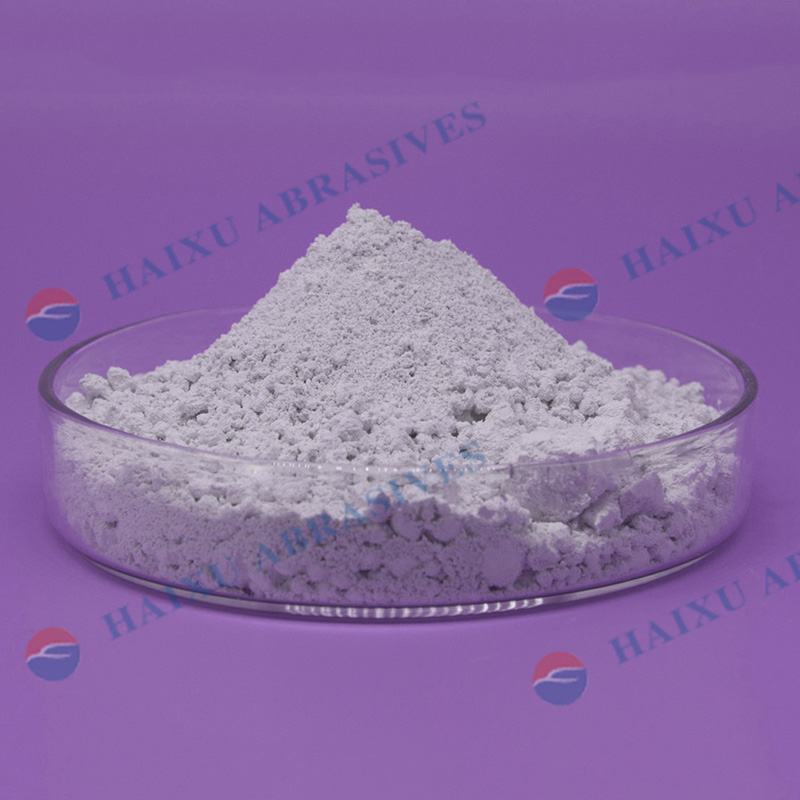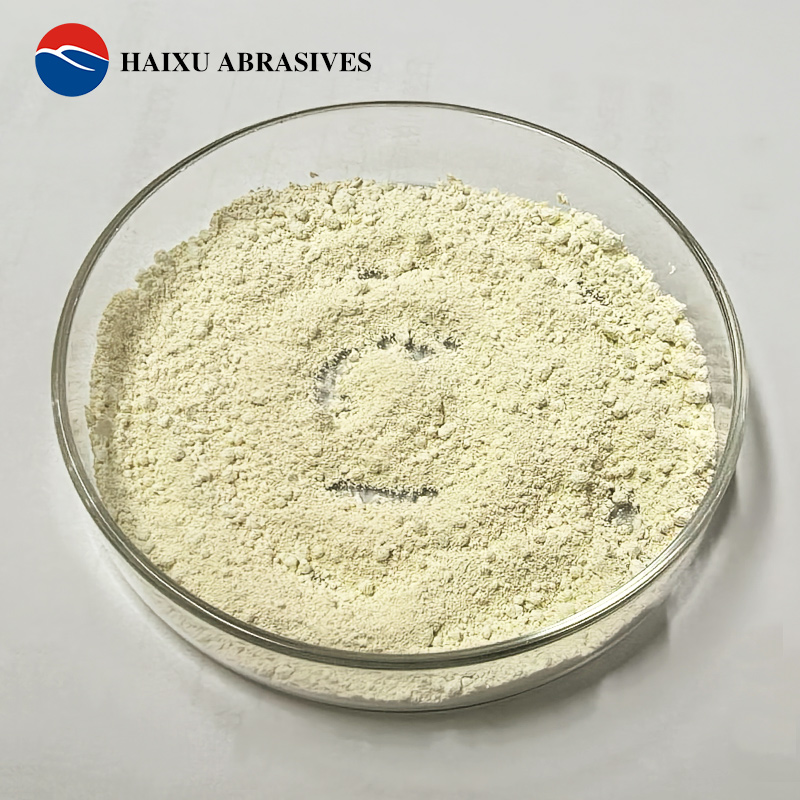


Aluminum Oxide powder & Cerium Oxide powder for glass polishing
Both aluminum oxide polishing powder (Al₂O₃) and cerium oxide polishing powder (CeO₂) can polish glass, but their mechanisms, efficiency, surface quality, and costs differ significantly. The specific differences are mainly reflected in the following aspects:
| Item | Aluminum oxide Powder | Cerium Oxide Powder |
| Removal Mechanism | Primarily mechanical micro-grinding, hardness 9 (Mohs) > glass 6–7, brittle fracture + microcracks. | Chemical-Mechanical Synergistic Grinding. Cerium oxide dissolves silica on the glass surface, providing polishing and brightening functions. |
| Damage to Polishing Tools | High wear on polishing pads and tools | Soft reaction layer causes less wear on polishing tools. |
| Glass Material Adaptability | Can polish sodium-calcium, borosilicate, and quartz, but prone to hazy defects on low-alkali aluminosilicate glass. | Fastest on sodium-calcium and borosilicate; maintains a rate of over 60% on high-alumina glass with low haze. High-purity or praseodymium-cerium rare earth polishing powder is also suitable for optical glass polishing. |
| Particle Morphology | α-Al₂O₃ angular | Near-spherical aggregates, easily dispersed. |
| Particle sizes available | 0.5um-63um, suitable for rough, medium, and fine polishing. | Mostly 0.7um-4um, used primarily for fine polishing and mirror polishing. |
Aluminum oxide or cerium oxide powder?
• Mobile phone cover plates, automotive glass, optical lenses, LCD substrates: Directly choose CeO₂; faster cycle time, higher yield, and lower overall cost.
• For rough polishing or thick glass blanking, where scratches are not a major concern, use aluminum oxide polishing powder first, then switch to cerium oxide polishing powder for fine polishing to remove scratches.
• Quartz glass, microcrystalline glass (low expansion): Alumina polishing powder easily leaves minor scratches; it is recommended to use rare earth polishing powder throughout the process. If the quartz part is too large, a mixture of alumina and cerium oxide can be used, offering a cost-effective compromise.